Grants
Restoring ecosystems
Munsary peatland restoration
£20,000 awarded
Grantee: Plantlife
Duration: 12 months (January 2026 – December 2026)
Note: Thank you to the BA Better World Community Fund for generously supporting this work on Crowdfunder.
Background
Peatland is an internationally important habitat, crucial in terms of carbon storage, water quality, and biodiversity.
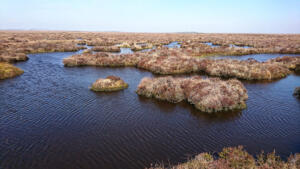
Munsary is a vast undulating plain of peatland in the famous Flow Country of Caithness and Sutherland, which as well as now being a World Heritage site, is also an Important Plant Area (IPA) and a designated Site of Special Scientific Interest (SSSI).
Centuries of environmental pressures such as historic drainage, erosion, and invasive non-native conifer scrub, have resulted in a severely degraded habitat.
The Project
This project aims to restore biodiversity, sequester carbon and improve the long-term resilience of this unique landscape.
In 2026, targeted restoration work will:
-
- Restore hydrological function by blocking artificial drains and gullies.
- Stabilise eroding peat surfaces through hag reprofiling and revegetation.
- Remove non-native conifer scrub to prevent further habitat degradation.
- Improve conditions for protected species and habitats within designated conservation areas.
- Monitor restoration outcomes and maintain long-term site health through active management.
These objectives will be achieved through a number of restoration techniques. These methodologies are based on prior peat depth and condition surveys and have been designed in collaboration with NatureScot. Specifically, they include:
-
- Drain and Gully Blocking – through construction of peat dams and bunds on approx. 8km of drains and 2km of gullies
- Hag Reprofiling and Revegetation – through machinery work on approx.. 700m of bare eroding hags
- Scrub Clearance – manual removal of approx.. 4.5 ha of invasive sitka spruce and lodgepole pine
- Deer Management – monitoring to ensure management that maintains deer density at ~6km2, thus reducing browsing pressure
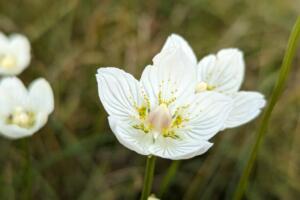
- Species Protection Measures – including pre-operational surveys for otters and water voles, breeding bird surveys, and establishing buffer zones around sensitive habitats, such as the Marsh Saxifrage colony.
- Access Route Management: temporary bridges and fence opening to facilitate machinery access
- Engagement: Plantlife plans to engage with scientists, protected area managers, and local, regional, or national government during the execution of the project.
These interventions will restore biodiversity, sequester carbon and improve long-term landscape resilience.