
Grants
Restoring ecosystems
Knoydart Wild Trees Survey
£12,000 awarded
Grantee: Knoydart Forest Trust
Duration: 6 months (May 2025 – November 2025)
Background
Throughout the Highlands and Islands, there are efforts to bring back native woodland, following centuries of pressures such as deforestation and overgrazing.
There are two closely related, but different approaches to regenerating woodlands. Many projects focus on planting native trees, and in many areas, where trees have disappeared completely, this is the only option.
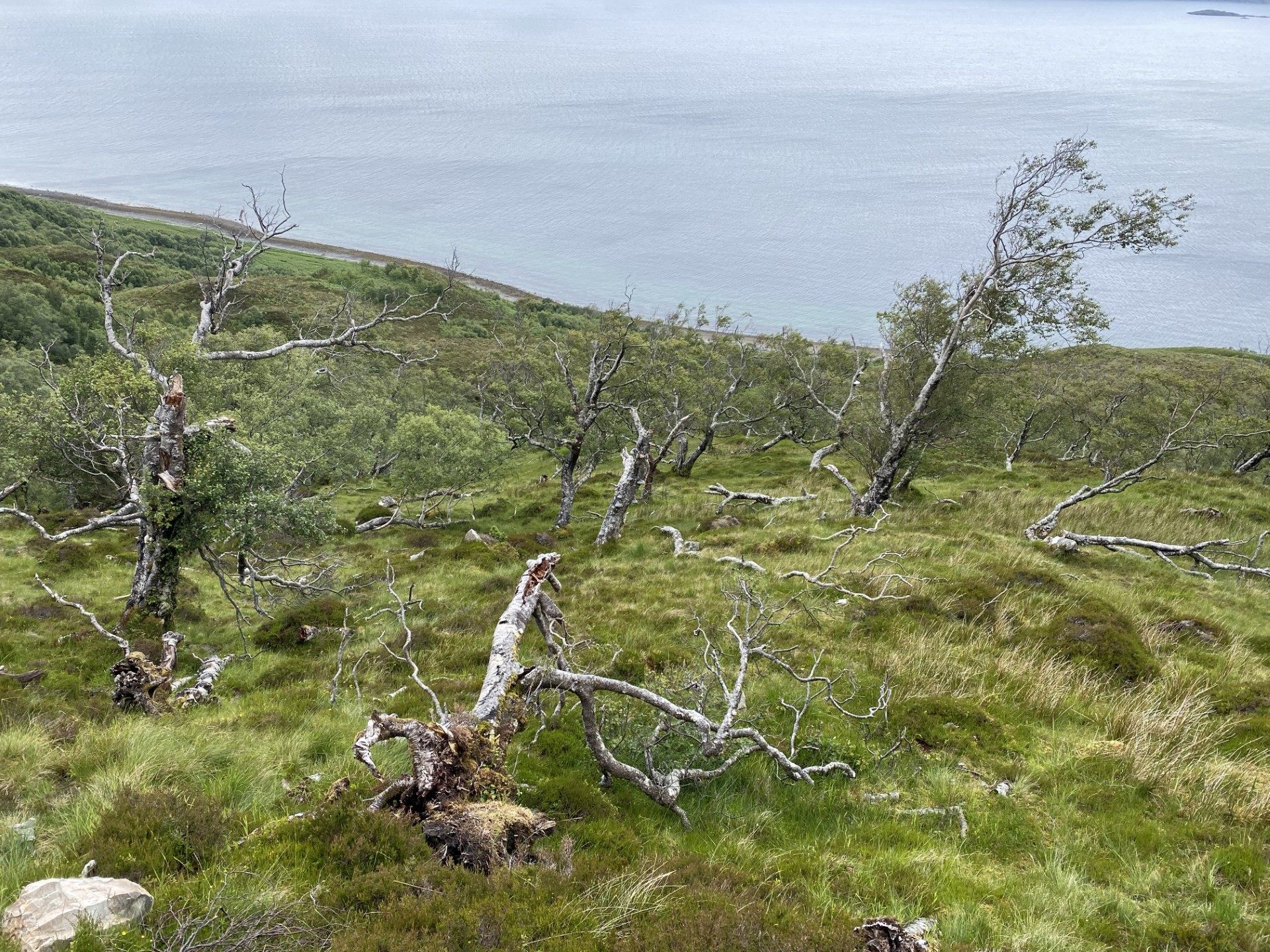
An alternative approach is to regenerate and expand wild tree populations naturally. Wild trees are defined as Scotland’s natural tree populations. What makes them unique from planted trees is that they are part of an unbroken chain of natural regeneration that goes right back to the end of the last ice age.
Wild trees are of particular biodiversity value because they support unique ‘refugial species’ such as lichens, mosses, wildflowers, ferns, and herbs. They are also genetically diverse, meaning they are more resilient to threats such as disease and climate change.
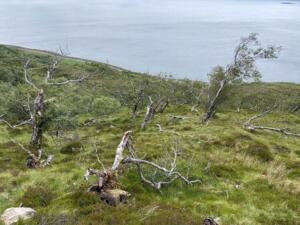
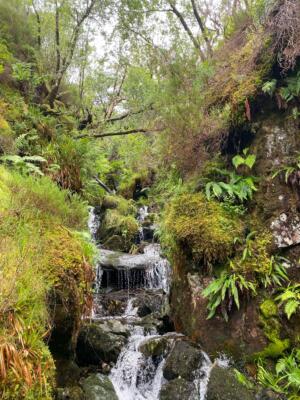
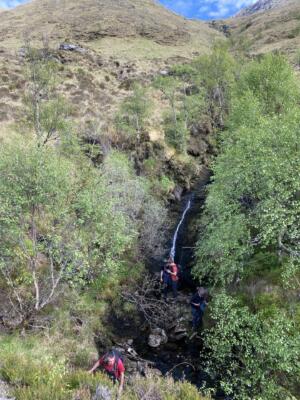
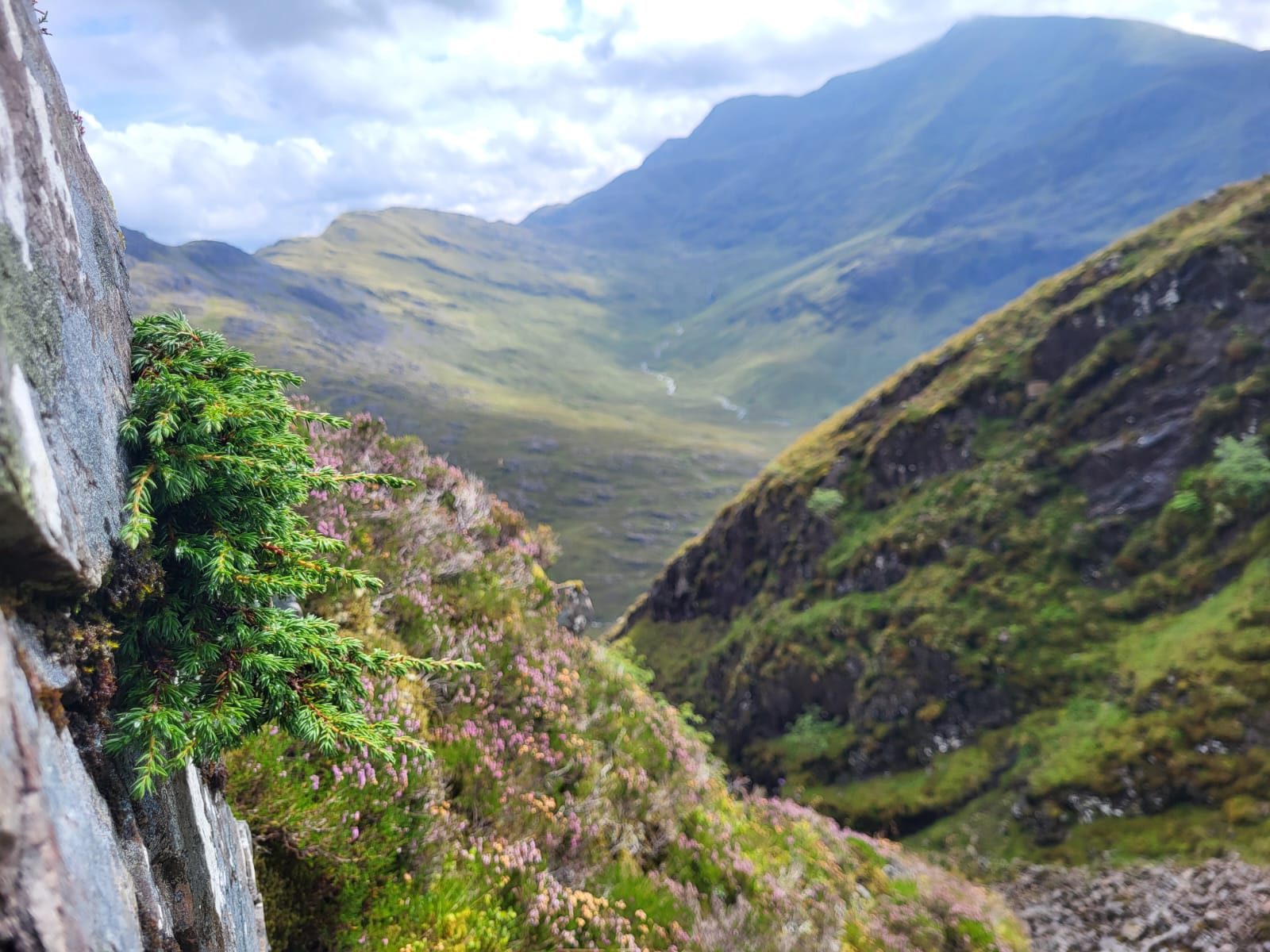
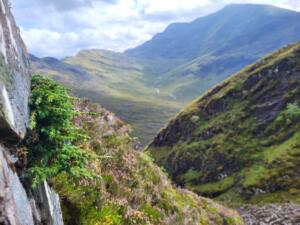
It can take time, but when the conditions are right, wild trees can reforest whole landscapes. On Knoydart, a community-owned peninsula accessible only by boat or foot, there is real potential for landscape-scale woodland regeneration. Pockets, or ‘refuges’, of wild trees are found throughout the rugged, mountainous landscape, clinging to steep sided ravines, gullies, and crags.
Knoydart Forest Trust have been protecting and regenerating woodland for over 25 years. Now, the ambition is to do it at landscape scale. The first step towards this is understanding the full extent of these wild tree ‘refuges’. In 2025, they undertook a Wild Trees Survey across 8,500 hectares of Knoydart.

The Project
The Wild Trees Survey was designed in partnership with highly renowned rewilding charity Trees for Life. The first challenge was to identify potential refuges using historical maps from as far back as the 1750’s, along with modern aerial imagery.
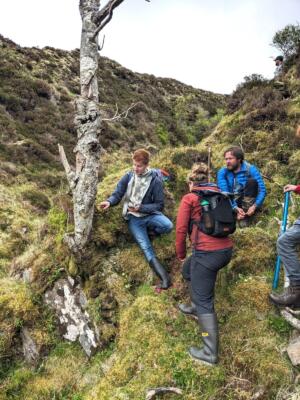
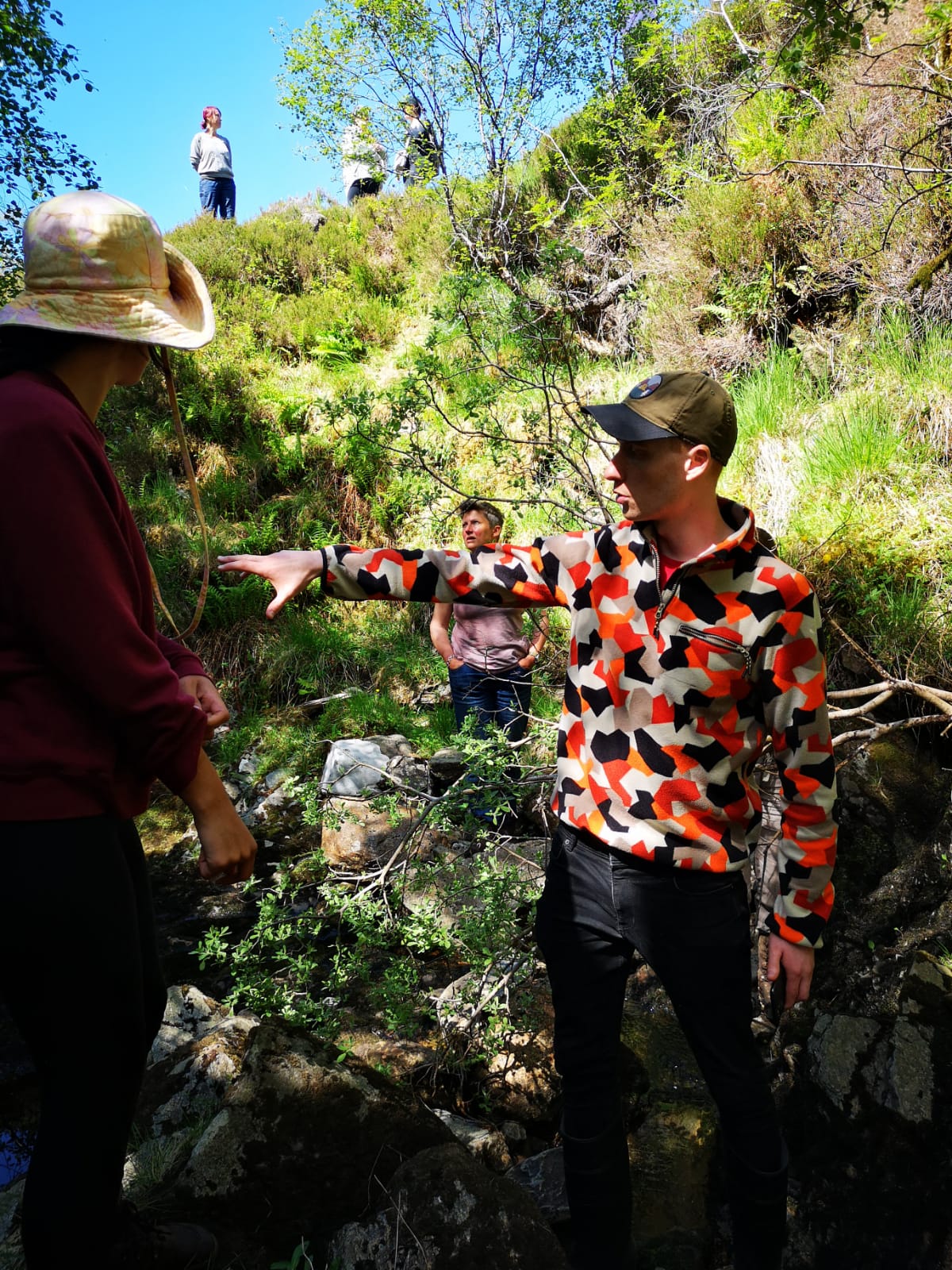
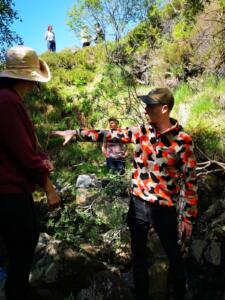
Over nine weeks in the summer, a dedicated team from Knoydart Forest Trust, Knoydart Foundation, and Trees for Life surveyed around 8,500 hectares using 1396 plots and 248 transects.. These varied from steep coastlines to remote mountainsides, tree-scattered hillslopes to jagged gorges bursting with life.
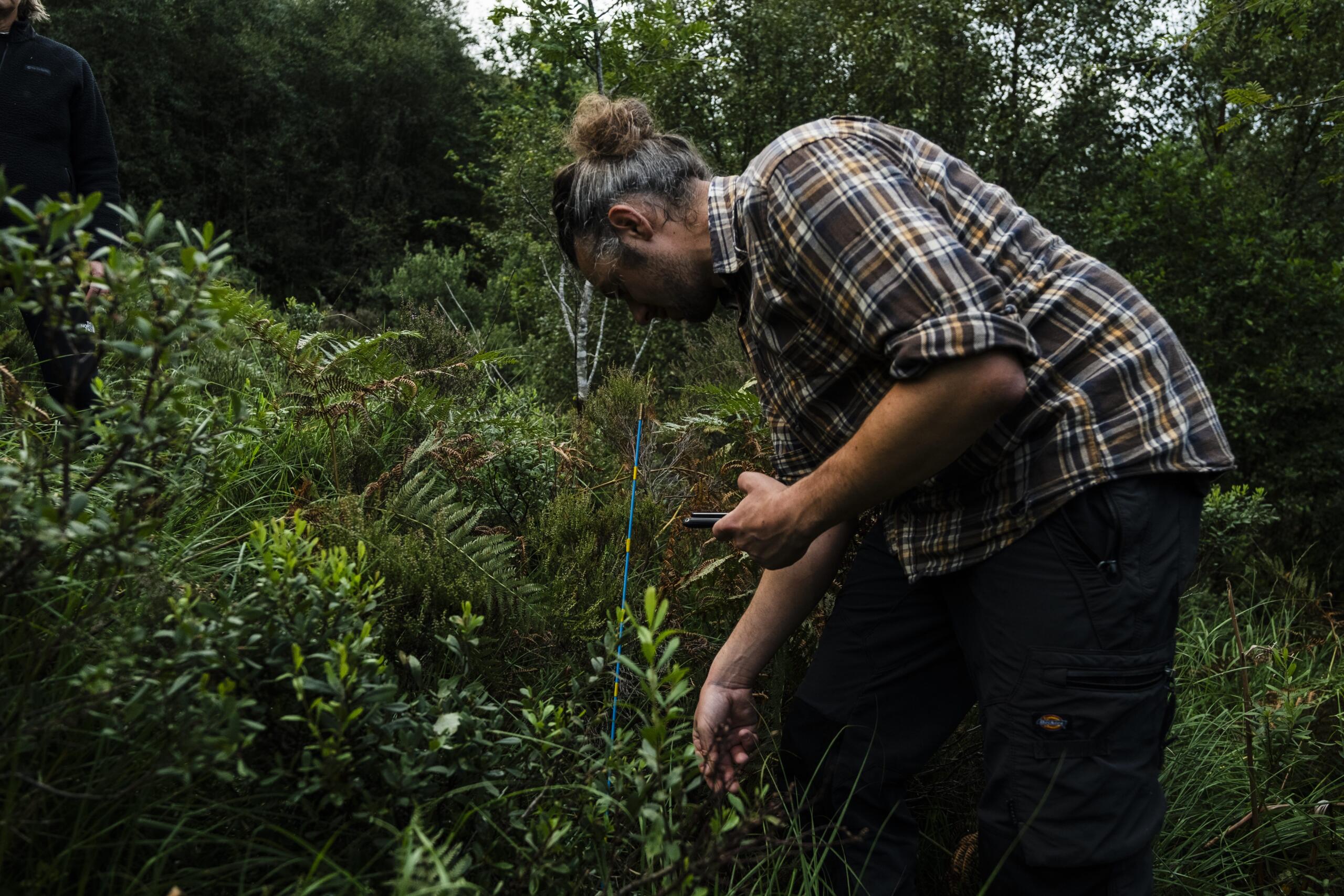
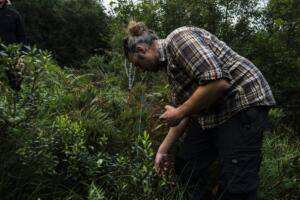
In each plot or transect, the team collected data on both tree and refugial species, recording attributes such as vegetation composition and abundance of regeneration. Data was then processed to calculate metrics such as species diversity and herbivore impacts.
The survey resulted in 240 hectares of Ancient Woodland being mapped and 21 key refuges for wild trees and refugial species identified. Total diversity was found to be high but concentrated in small, relatively inaccessible hotspots that were widely distributed across the landscape.Populations of 20 different wild tree species recorded. However, four common tree species – downy birch, rowan, eared willow, and alder – accounted for 89% of the wild trees.
It also found a fairly positive picture of wild tree health, with 300,000 established wild trees across the survey area, of which 80% were at the ‘maturing growth’ stage. This was attributed to ‘well-targeted deer fences enabling natural regeneration to occur in key hotspots.’
The two key threats identified were high levels of herbivore impact, and invasive non-native plants. A number of refuges were identified as high, or very high, priority for recovery, as well as individual species such as creeping willow and aspen.
Excitingly, the report confirmed that there is potential for significant natural woodland expansion. The report concluded with a series of detailed recommendations to land managers. This included recommendations for each individual refuge, along with the following landscape-wide guidance:
- Maximise recovery through natural regeneration and expansion.
- Progress towards effective landscape-scale deer management.
- Maximise effectiveness of existing deer fences.
- Consider whether new fencing should be used in critically threatened areas.
- Consider managing hill sheep access to sensitive areas.
- Consider strategic grazing to accelerate recovery and maintain habitat for sensitive species.
- Remove conifer plantations.
- Undertake wider non-native species control.
- Consider targeted projects to reinforce certain wild tree populations.
- Plant strategically and sensitively.
- Develop a monitoring program to inform ongoing management and measure recovery progress.
Impact
Monitoring of Native Species
The project significantly strengthened monitoring across the Knoydart peninsula. This improved ecological understanding of the landscape allowed the team to consider stregically
- 192 native tree populations were monitored, based on individual wild tree species populations across 21 identified refugial areas.
- 20 native species were monitored in total.
- A further 1,396 monitoring records were collected (e.g. species observations, survey data), providing a strong evidence base for future management and restoration.
Restoration of Native Species
The project assessed the potential for natural regeneration, allowing the team to strategically set recommendations to land managers. This is an essential step towards improved land management and landscape-scale ecological restoration.
- 420 hectares of land were identified for protection as refuge sites and seed sources.
- These refuges are estimated to support up to 1,800 hectares of potential natural regeneration over time.
Awareness Raising
Community and stakeholder engagement events helped to build local understanding and support for the project, improving the effectiveness of long term woodland recovery.
- 5 awareness-raising events were delivered, including school sessions, community days, a biodiversity celebration event, and a local deer management group update.
- 58 people engaged directly with the project through these events.
- 9 land management professionals and practitioners reported improved knowledge.
Capacity Building
The project increased local skills in ecological monitoring, improving the viability of long term woodland recovery.
- 2 training workshops were delivered.
- 9 people were trained, strengthening local capacity for monitoring, land management and restoration activity.
All photos courtesy of Knoydart Forest Trust.
The HIEF team were extremely supportive and helpful in all aspects of the application process and throughout the project. We are very grateful for their support in making our project happen
Lorna Schofield, Knoydart Forest Trust