
Grants
Protecting habitats & species
Lunan Burn Wildlife Cluster
£7,128 awarded
Lunan Burn Wildlife Cluster Birds & Bats
Grantee: Lunan Burn Wildlife Cluster
Duration: January 2025 – March 2026
Background
Farm clusters – whereby neighbouring landowners/farmers/crofters work together to improve biodiversity at landscape scale – are an expanding network across the Highlands and Islands. This farmer-led project aimed to support and monitor local bird populations through the installation of barn owl and swift nesting boxes and the use of innovative bioacoustic technology for baseline data collection.
In their words
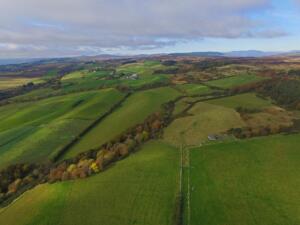
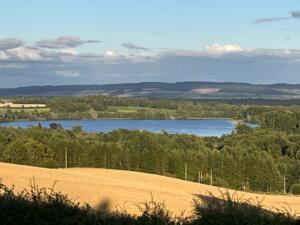
The Lunan Burn Wildlife Cluster is a collaboration of landowners & farmers in the Dunkeld/Blairgowrie area of Highland Perthshire who have come together to help our local wildlife & biodiversity through landscape scale management. Our Cluster was formed in 2024; our three key aims being water quality, pollinator habitats and deer management.
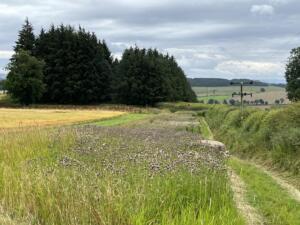
Our Barn Owl and Swift & Bio-Acoustic Monitoring project developed in conjunction with improving our pollinator habitats, and our general aim to improve biodiversity in our cluster.
In our local area, we have suffered a noticeable decline in both swifts and barn owls, and part of this project has been specifically to encourage both species back into our cluster area.
We decided that encouraging these two species whilst monitoring our wider bird populations would give us some indication as to the success of our longer term pollinator habitat improvements, and at least provide us with solid base line data.
With the assistance and encouragement of HIEF, and the funding provided, we were able to kick off with this project in March/April of last year.
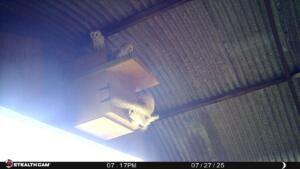
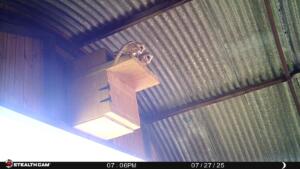
We decided to utilise old farm buildings to site ten barn owl boxes, spread throughout the cluster, concentrating on areas where there is close access to rough ground and lots of voles, and I’m pleased to report a year on that we already had boxes occupied, and at least one successful hatching and rearing of two owlets. We are looking for further successes this year.
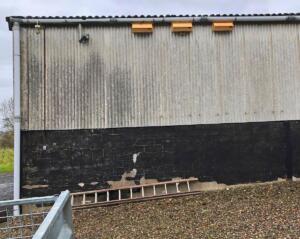
To encourage swifts, we put up twenty swift boxes in groups of twos and threes on seven sites in the cluster, putting them on suitable buildings belonging to cluster members, in areas where swifts had been sighted in the past, but without nesting. To encourage birds to find these boxes, we added caller units, and this should help significantly in swifts finding and occupying these boxes.
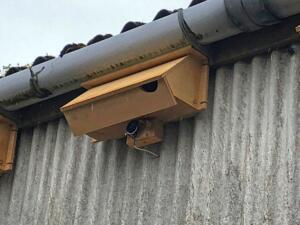
Additionally, we also deployed bio-acoustic monitors into four locations for the months of May & November to record bird species – residents plus summer & autumn migrants. The first year’s results were encouraging, and have provided us with some base line data to build on. We plan on this being an ongoing project, with bats being included into the information capture in 2026.
The two highlights for me were watching the Barn owl family, and seeing a number of swifts swooping around the swift boxes in early July, no doubt attracted by the caller. Fingers crossed for 2026!
My main takeaway from this project has been the enormous assistance and enthusiasm from those I approached for advice. In particular, Tim Norris of Hampshire Swifts (who were instrumental in the advice regarding callers, and putting me in touch with Graham Fell of Kendal Men in Sheds, who put together the caller units for us), Rob Tilsley of the Barn Owl Trust, and Stefan Zeeman of Carbon Rewild, who provided the bio-acoustic monitors, and lots of advice. So, many thanks to them all, and the volunteers who have helped within the cluster, and not least to Louis and Sally of HIEF, for helping make this project happen.
Robert Rattray, Lunan Burn Farm Cluster
Project in Numbers
- Birds nests
- 10 barn owl boxes deployed
- 20 swift boxes installed
- 8 swift callers deployed
- Bioacoustic Monitoring
- Survey 1 (May/Aug–Sep 2025): 53,277 total calls identified, 58 bird species recorded, including 9 red-listed species
- Survey 2 (Nov/Dec 2025): 14,000 total calls identified, 38 bird species recorded, including 2 red-listed species
- Monitoring Coverage: 4 monitoring sites established
- Community Engagement
- 20–30 people attended events
- 3+ event types delivered, including cluster meetings, cross-cluster visits and GWCT Game Fair Q&A sessions
Impact
- Habitat creation: The project successfully established 30 new nesting sites, including 10 barn owl boxes and 20 swift boxes. This led to one confirmed breeding success where a pair of barn owls successfully reared an owlet.
- Establishment of Ecological Baselines: By utilising bioacoustic monitors, the project identified 58 different bird species, including nine red-listed species, and recorded over 67,000 individual calls across two survey periods. This data provides a vital baseline that the cluster will use to measure the long-term success of other restoration efforts, such as hedgerow planting and wetland creation.
- Technological Innovation and Research: The project piloted the use of swift callers to attract birds to nesting boxes, a technology believed to be previously unused in a local context in Scotland. This innovation provides a case study for other clusters or individuals to replicate similar monitoring and conservation techniques.
- Community Awareness and Knowledge: The project improved local knowledge by engaging 20 to 30 people through cluster meetings and a Q&A panel at the GWCT Scottish Game Fair.